Business domain

Logistics 2.0: Communication as a Control Layer for Delivery Operations

Seamless communication is no longer “support”. It’s the control layer that drives task execution, SLA stability, and reliable delivery — especially for wholesale and valuable goods under unstable coverage.
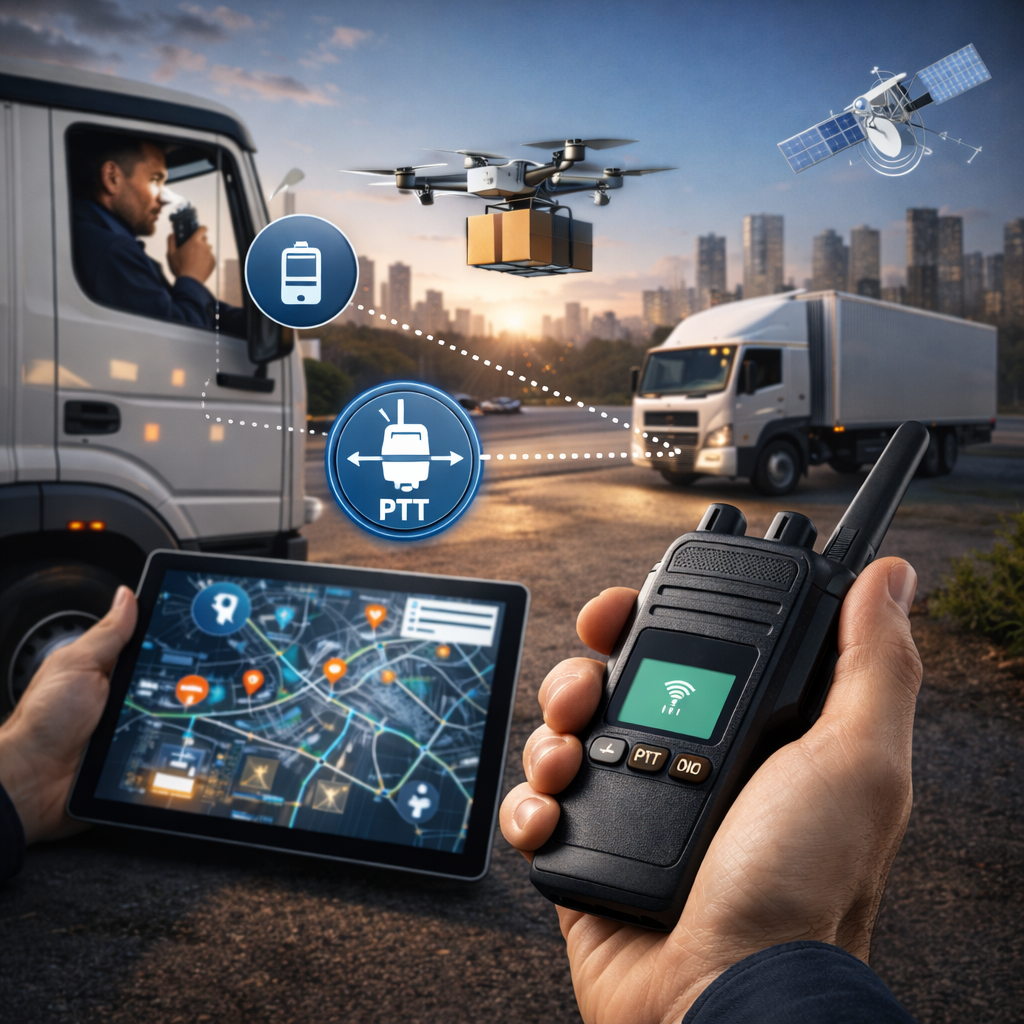

Logistics Communication Dispatching Visibility Control

Delivery operations break when communication breaks

Modern logistics is not just routing and task assignment. It’s a real-time coordination problem across people, vehicles, locations, and exceptions — often under unstable GSM/Internet connectivity.

When the channel is unreliable, every operational decision degrades: tasks slip, visibility disappears, and response time collapses.

01

Task execution depends on a stable channel

If drivers can’t reliably receive or confirm tasks, dispatching becomes guesswork — and delivery performance drops even with “good routing”.

02

Visibility is impossible without real-time updates

Connectivity gaps create blind spots: movements, statuses, and incidents are reported late — making monitoring and control ineffective.

03

Wholesale and valuables raise the stakes

For valuable goods and controlled logistics, slow incident response and broken coordination become direct risk — for security, compliance, and trust.

Where communication becomes mission-critical

Different delivery operations depend on communication in different ways. The same “driver app + chat” approach won’t work if connectivity is unstable or the model is high-risk.

Distribution & wholesale

High-volume execution where dispatch must coordinate routes, stops, and changes without delays — and keep control when coverage drops.

  • Primary goal: predictable execution at scale
  • Main constraint: uneven connectivity + time pressure
  • Key risk: blind spots and delayed status updates

Field operations & service fleets

Task-based work where dispatch must assign, confirm, and reroute in real time — with reliable acknowledgements and escalation paths.

  • Primary goal: task completion with fast response
  • Main constraint: mobility + changing priorities
  • Key risk: missed tasks and slow escalation

Valuable goods & controlled logistics

Security-focused delivery where dispatcher–vehicle communication, auditability, and incident readiness are part of the operational core.

  • Primary goal: security + traceability
  • Main constraint: compliance and continuous control
  • Key risk: visibility gaps and delayed incident response

Where communication automation creates the biggest leverage

This is not about adding “chat”. It’s about building an operational channel that stays reliable, keeps decisions centralized, and makes execution observable — even with poor coverage.

01

Stable operational channel

When GSM/Internet is inconsistent, you need a communication layer designed for continuity — so dispatch and drivers stay connected when it matters.

  • Push-to-talk workflows (where applicable)
  • Acknowledgements for tasks and status changes
  • Emergency escalation without “call chaos”
02

Centralized dispatch control

Dispatcher needs one control point to assign tasks, monitor routes, detect threats, and respond quickly — without relying on scattered messages.

  • Single dashboard for tasks + incidents
  • Route monitoring with live operational updates
  • Clear escalation paths for exceptions
03

Visibility and auditability

Tracking and logs turn communication into operational evidence: who received what, when actions happened, and how incidents were handled.

  • GPS monitoring for drivers and vehicles
  • Time-stamped events and confirmations
  • Audit-friendly history for controlled operations
Practical outcome Faster response, fewer lost tasks, stable monitoring, and predictable execution — even under unstable coverage.

Want to validate how a reliable communication layer would improve your delivery model?

Validate my ops flow →

What we build for communication-driven logistics

A modular platform that combines communication continuity with task execution, monitoring, and control — designed for real operations, not demos.

Dispatcher & admin dashboard

Central control point for task assignment, monitoring, and incident response.

  • Task creation, distribution, confirmations
  • Route monitoring + exception handling
  • Admin controls and role management

Field app for drivers

Clear tasks, reliable communication, and operational updates under real conditions.

  • Status events + timestamps
  • Hands-free-friendly workflows (vehicle use)
  • Offline-tolerant patterns (where needed)

Push-to-talk & continuity layer

Communication designed for coverage gaps — not dependent on “perfect Internet”.

  • PTT workflows (where applicable)
  • Stable channel across teams and sites
  • Priority routing for urgent events

GPS monitoring & live visibility

Real-time tracking of all employees and vehicles to keep operations observable.

  • Live location and movement history
  • Route adherence and zone visibility
  • Alerts for anomalies and exceptions

Incident & SOS workflows

Emergency readiness built into operations — not added as an afterthought.

  • Hardware Bluetooth SOS button support
  • Escalation and dispatcher response flow
  • Evidence trail for controlled operations

Logs, auditability & control

Time-stamped actions and history that make operations provable — for security and compliance models.

  • Immutable event history (where required)
  • Role-based permissions
  • Audit-friendly export and reporting

Turn logistics communication into a controllable system

If unstable connectivity, task slippage, and visibility gaps are slowing operations — we can map your workflow, identify failure points, and design a communication + control layer that works in production.

  • Communication & execution flow map (dispatcher → driver → confirmation)
  • Coverage-risk assessment + continuity strategy
  • Implementation plan: dashboard, field app, visibility, incident workflows
Book a 15-min call →

Fast validation · Clear scope · Built for real operations

Start with discovery

We’ll assess your operational model, identify where connectivity and coordination fail, and propose a realistic architecture for communication-driven control.

Output Risk map + decision points
Next step MVP scope or phased rollout
We use cookies

We use cookies on our website. Some of them are essential for the operation of the site, while others help us to improve this site and the user experience (tracking cookies). You can decide for yourself whether you want to allow cookies or not. Please note that if you reject them, you may not be able to use all the functionalities of the site.