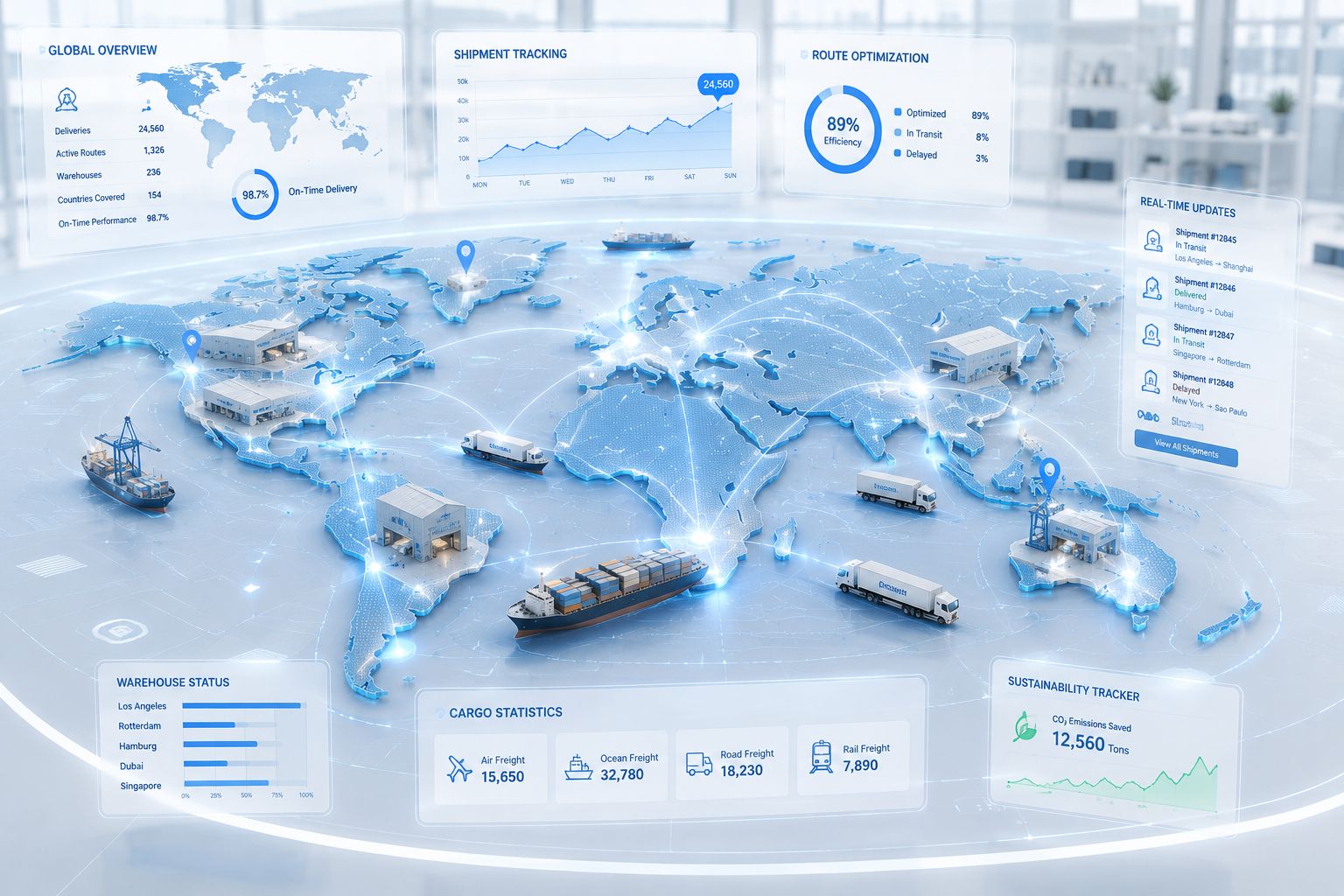
The idea of the "digital twin" has made its way down from the rarefied world of aerospace engineering to become an integral part of modern supply chain management planning. For a COO or CTO, using digital twins in logistics isn't just about a three-dimensional representation of the system — it's a living virtual copy of the whole operation. That gives companies the ability to test thousands of hypotheses virtually, with zero real-world investment.
The Mirror Effect: Defining the Modern Logistics Digital Twin
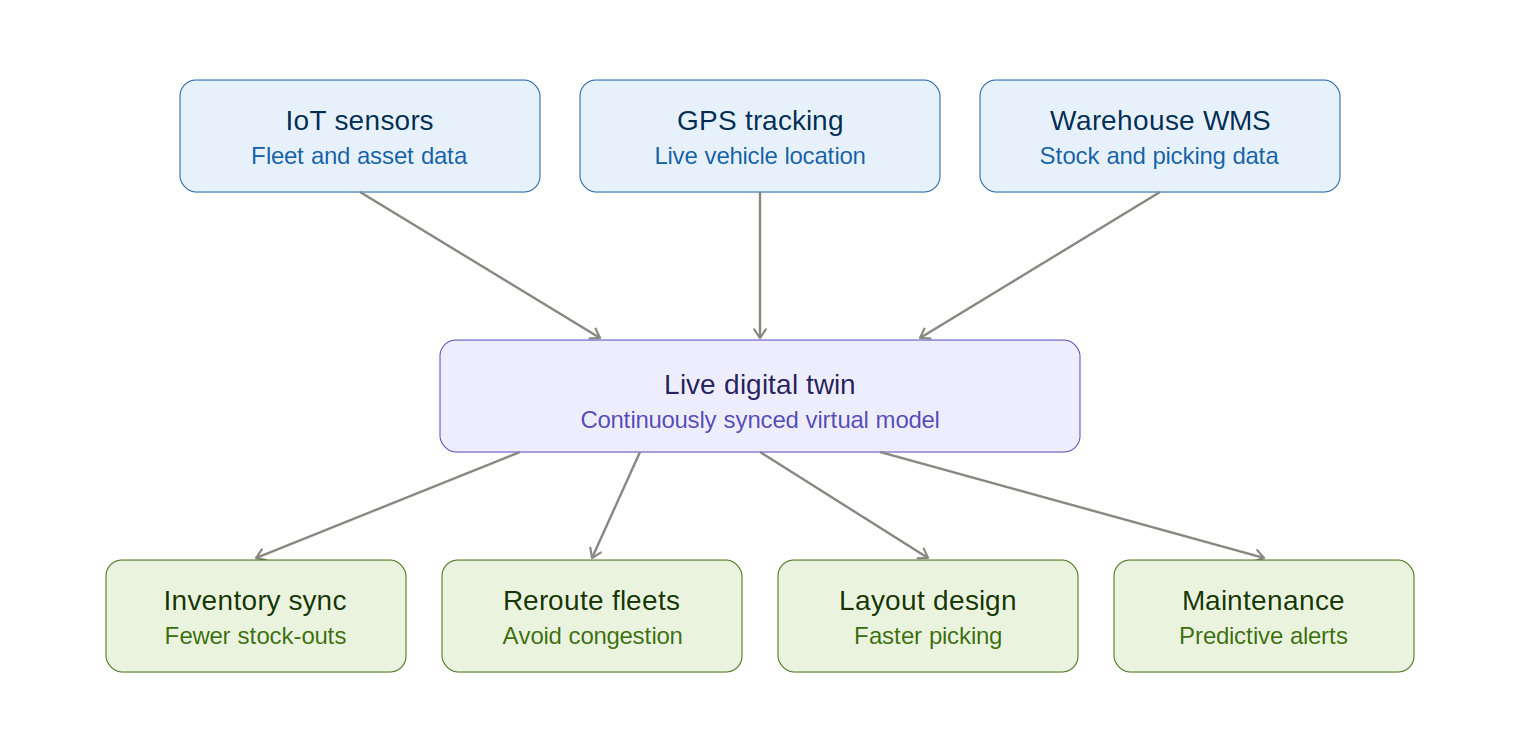
A digital twin is more than a simulation — it's a living system, fed by an unending stream of live data from sensors, GPS trackers, and warehouse management software. That "mirror" unlocks new scalability insights and surfaces hidden weaknesses along the way. The primary business drivers behind digital twin adoption include:
- Real-Time Inventory Control: Keeping inventory data synchronized in real time to avoid stock-outs.
- Proactive Congestion Detection: Modeling congestion points and rerouting fleets before delays happen.
- Optimal Warehouse Design: Testing new rack layouts virtually to increase picking productivity.
- Greater Visibility: Establishing a seamless line of sight across the supply chain, from carrier to distributor.
Moving From Static Dashboards to Dynamic Simulation
Older systems run on lagging indicators — information that only surfaces after the event has already happened. Digital twins give logistics systems leading indicators instead, flagging problems before they occur. Gartner's research found that digital twins can improve delivery reliability by up to 25 percent.
Enhancing Operational Visibility Through IoT Integration
A digital twin is only as good as the data feeding it. Accurate IoT sensors enable a context-aware route automation process, which becomes essential in industries where there's no room for error — pharmaceuticals and perishable cargo transport being prime examples.
Reducing Inefficiencies with Predictive Maintenance
One of the most direct benefits of digital twins shows up in fleet management. By tracking a vehicle's digital twin performance over time, an organization can predict when specific parts are likely to fail, moving closer to true predictive maintenance and keeping the fleet available during periods of heavy demand.
Implementing a Scalable Digital Twin Framework
Scaling a digital twin across a global enterprise requires a modular approach. Rather than trying to model the entire global network at once, successful implementations start with high-impact pain points. For companies working around legacy system constraints, the digital twin acts as a modern data layer sitting above the old infrastructure.
Key steps to implementing a digital twin solution successfully:
- Define High-Impact Use Cases: Start with scenarios that generate significant impact, such as port logistics.
- Guarantee Interoperability: Use standard APIs to unify disparate data streams into a single virtual model.
- Invest in Custom Visualization: Off-the-shelf models rarely reflect a provider's specific operational quirks.
- Focus on Security: Protect your digital world with a dedicated logistics cybersecurity layer.
Digital twin technology is one of the best tools available for coping with the challenges of the modern logistics landscape. With it, CTOs and COOs can build a supply chain flexible and resilient enough to withstand almost any disruption — but only with a tailored software solution built around the business's actual operations.
Key Takeaways
- A logistics digital twin is a live virtual replica of the operation, continuously fed by sensor, GPS, and warehouse management data — not a static 3D model.
- Core use cases include real-time inventory sync, proactive congestion rerouting, warehouse layout testing, and end-to-end supply chain visibility.
- Digital twins shift logistics from lagging indicators to leading ones, with Gartner research pointing to up to a 25% improvement in delivery reliability.
- Data quality is the bottleneck — accurate IoT sensor input is critical for sensitive cargo like pharmaceuticals and perishables.
- Predictive maintenance, powered by digital twin performance tracking, helps keep fleets available during peak demand.
- Successful rollouts are modular: start with high-impact use cases, standardize APIs, invest in custom visualization, and build in security from day one.