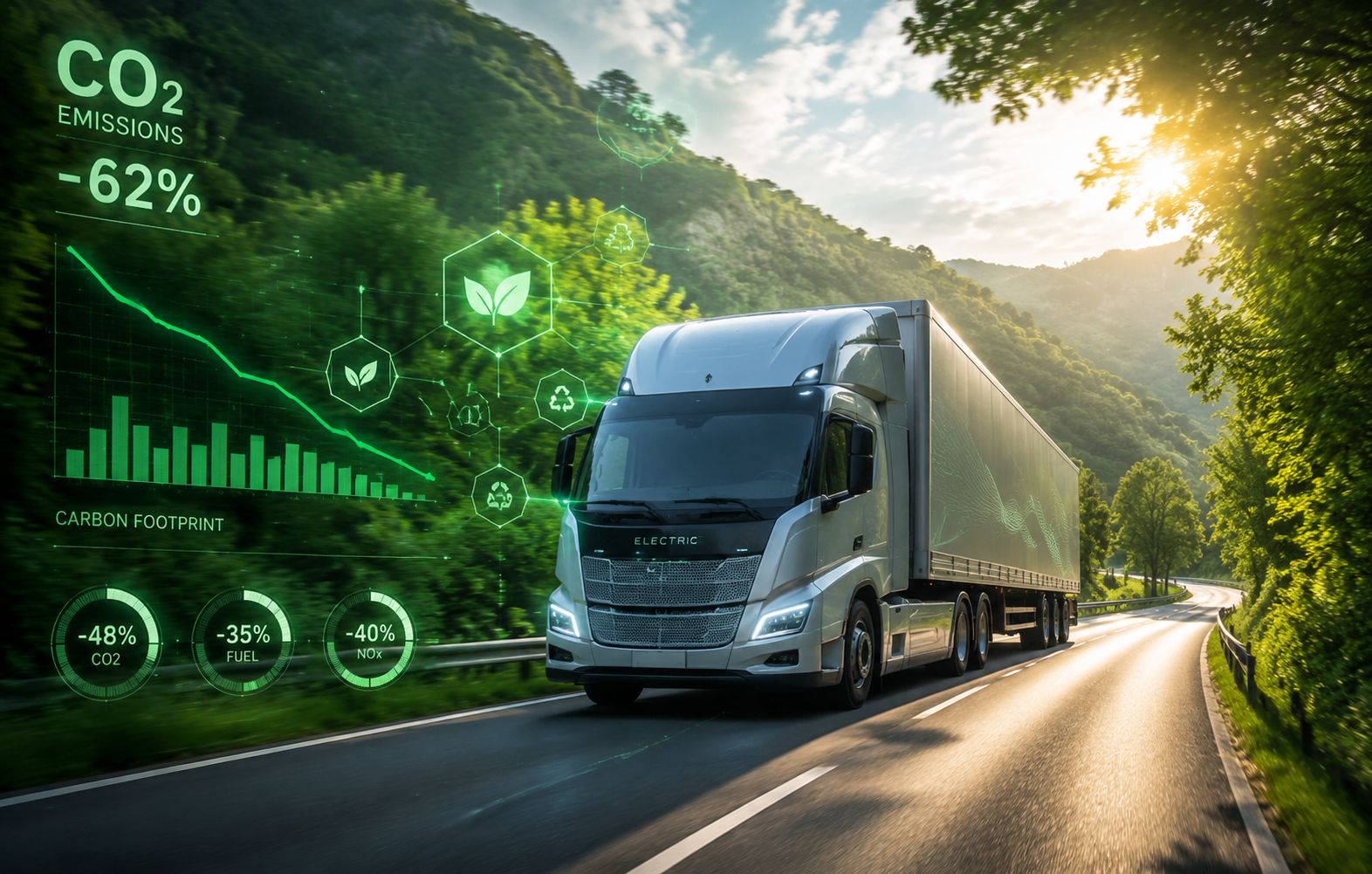
In today's logistics world, knowing "where" a consignment is has stopped being a competitive edge and become table stakes. What actually separates leading CTOs and COOs now is in-depth knowledge of "how" the cargo is doing. Real-time visibility goes far beyond tracking a dot on a map — it's a full environment rich with data, where every asset reports its condition, surroundings, and overall state of health.
The Visibility Illusion: Why Traditional Tracking Is No Longer Enough
Many companies fall into what could be called the "visibility illusion" — they have data, but not real visibility, because that data isn't cohesive, timely, or contextual. In a logistics operation with any blind spots, small hiccups snowball into full breakdowns. Logistics AI solves this by pulling real-time data from a wide network of IoT sensors.
The strategic advantages of an enterprise-wide IoT framework include:
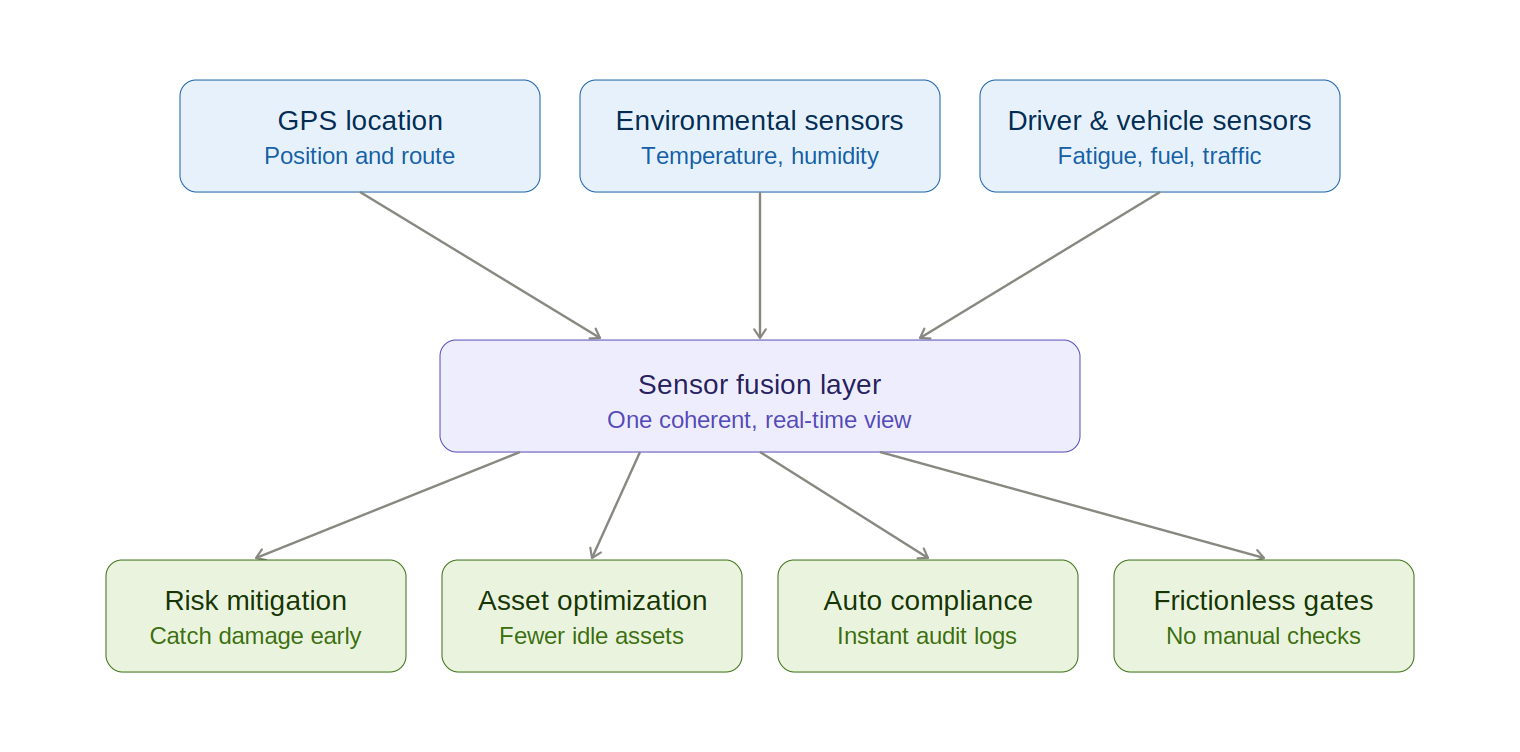
- Proactive Risk Mitigation: Catching environmental risks early, before cargo takes damage.
- Optimized Asset Usage: Spotting idle containers or vehicles to improve ROI.
- Automated Compliance: Generating instant audit logs for sensitive cargo.
- Less Operational Friction: Automated entry and exit at gates, with no manual intervention.
Sensor Fusion: Building a Multi-Dimensional View of the Supply Chain
The next major evolution of IoT in logistics is sensor fusion — the ability to combine multiple data streams into one coherent picture. Modern platforms go well beyond coordinates: they read GPS location alongside fuel consumption, driver fatigue sensors, ambient temperature, and external road and traffic conditions.
The Legacy Hurdle: Integrating IoT with Existing Infrastructure
One of the biggest pain points for enterprise companies is the technical debt baked into legacy systems. Most traditional WMS and ERP platforms were never built to handle the speed or volume of data that modern sensors generate. Lab42 bridges that gap with middleware layers that act as a translator between old-world infrastructure and new-world sensors.
Scalability in the Age of Billions of Connected Devices
As an organization grows, its device count grows exponentially with it. Scaling an IoT system at that pace requires a cloud-native architecture capable of handling massive data streams from the edge. Edge computing lets the system react to critical alerts on the spot, while routing less urgent data to the cloud for later processing.
Orchestrating the Future: From Raw Data to Actionable Intelligence
The real point of IoT in logistics isn't just gathering data — it's acting on it. Once real-time visibility is built into dispatch software, the system shifts from telling you something needs attention to actually doing something about it. A platform that can forecast problems delivers a level of resilience that simply wasn't possible before.
Roadmap for a successful IoT and visibility rollout:
- Target Mapping: Identify the high-value assets — like refrigerated containers — where visibility delivers the most value.
- Sensor-Agnostic Platform: Build software that works with any sensor type, not just one vendor's hardware.
- End-to-End Connectivity: Make sure IoT data flows smoothly through to dashboards and algorithms alike.
- Security Reinforcement: Apply end-to-end encryption to protect the supply chain from tampering.
Real-time visibility through IoT is the nervous system of the modern supply chain. For CTOs and COOs, the question isn't whether to adopt IoT — it's how fast they can deploy it against their most pressing visibility gaps. With the right team behind it, companies can build tailored solutions that make global trade simpler and considerably more profitable.
Key Takeaways
- Location tracking alone is no longer a differentiator — real competitive advantage comes from knowing the condition and context of cargo in real time.
- The "visibility illusion" happens when companies collect data that isn't cohesive, timely, or contextual enough to act on.
- Sensor fusion combines GPS, environmental, and driver/vehicle data into one unified view, rather than treating each signal in isolation.
- Legacy WMS and ERP systems weren't built for modern sensor data volume — middleware layers are what make integration possible without a full rebuild.
- Edge computing lets systems react instantly to critical alerts while routing lower-priority data to the cloud, which is essential for scaling to billions of connected devices.
- A successful rollout follows a clear order: target high-value assets, build sensor-agnostic software, ensure end-to-end connectivity, then reinforce security.