As the logistics network evolves into a highly integrated ecosystem, cybersecurity risk becomes more critical than ever. When an enterprise becomes a client of a logistics AI platform, any vulnerability carries risk far beyond data loss — it can halt fleets and compromise inventory, with liabilities to match. For CTOs and COOs, security is no longer an add-on; it's core to scalability and trust.
The Growing Attack Surface in Modern Logistics
The accelerated adoption of IoT, autonomous devices, and real-time tracking apps has exponentially enlarged the average attack surface in the supply chain industry. Every new element added to a logistics cybersecurity infrastructure is a potential new attack vector. With millions of dollars in goods moving through software, the "visibility" the industry talks so much about has to include visibility into network security.
The main security concerns facing the logistics industry by 2026 include:
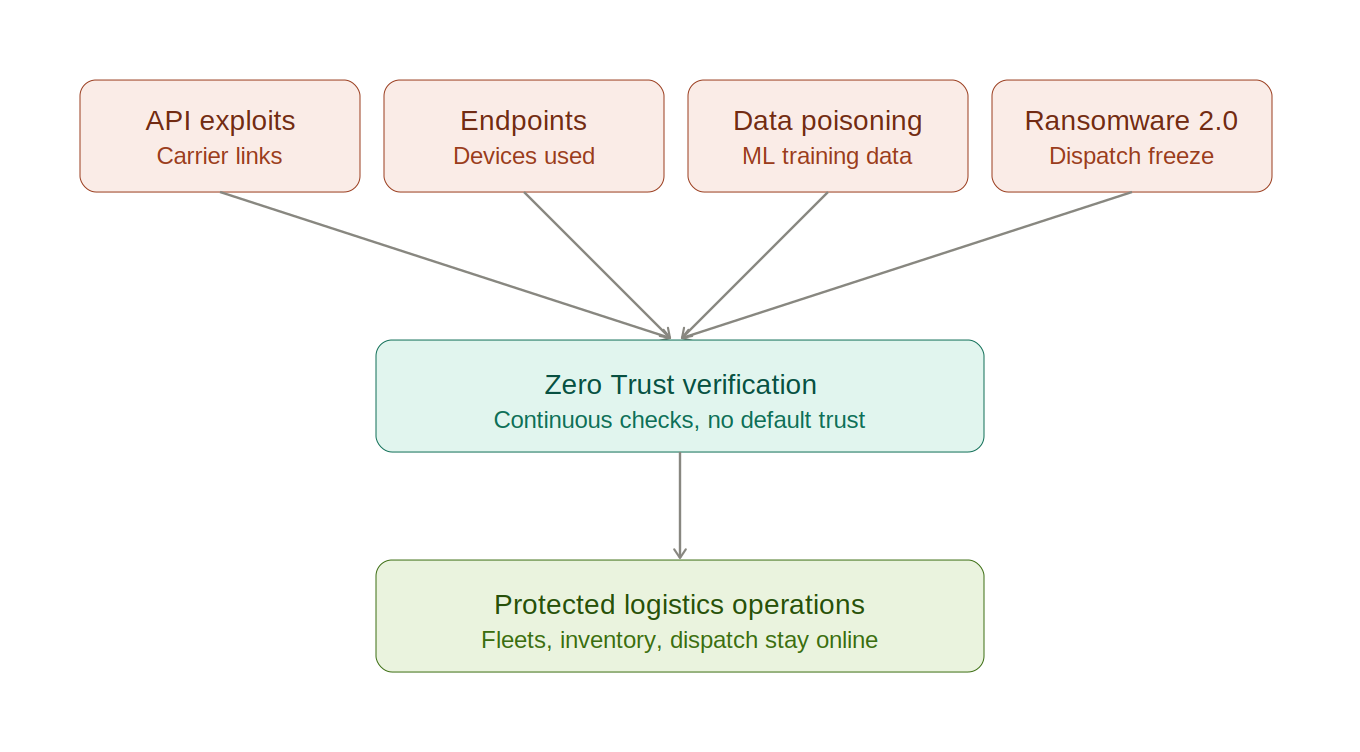
- API Exploits: Security gaps in the API integrations between warehousing solutions and third-party carriers.
- Endpoints: Tens of thousands of devices used by truckers and warehouse employees — the most vulnerable layer of the system.
- Data Poisoning: Deliberate attempts to corrupt the training data behind ML agents used for route optimization and inventory management.
- Ransomware 2.0: Highly targeted ransomware attacks aimed specifically at locking down dispatch software.
AI-Driven Threats: The New Frontier of Supply Chain Risk
The same technology that powers route automation is also being weaponized by cybercriminals. AI-driven attacks can scan for vulnerabilities at a speed no human team can match, hunting for weak points in a company's digital infrastructure. These automated threats can spot misconfigured servers or outdated encryption in seconds, which makes defending a logistics AI platform a continuous, 24/7 requirement. IBM's Cost of a Data Breach report notes that attack automation significantly cuts down the time it takes hackers to infiltrate a network.
Securing Data Integrity in Automated Dispatch Systems
Data is the heart of modern logistics. If a hacker alters coordinates inside a dispatch system, they can redirect high-value shipments without ever tripping a traditional alarm. Ensuring data integrity means every piece of information feeding your route automation tools has to be verified through cryptographic signatures and secure data pipelines — especially critical for companies running just-in-time delivery models, where even a five-minute disruption triggers a massive ripple effect.
Mitigating Risks in Legacy System Modernization
A large share of logistics cyber risk traces back to legacy systems. Most of them were built in an era that never accounted for today's web-enabled attacks. Modernizing these systems securely means wrapping old cores in a secure perimeter — modular "security wrappers" that layer new security capabilities onto existing infrastructure without a full rebuild.
Building a Proactive Defense Framework for Enterprise Logistics
To thrive in the age of cyber threats, logistics firms need to adopt a Zero Trust architecture — no software, person, or application is trusted by default, regardless of whether it sits inside the organization's network.
Fixing inefficiencies in the cybersecurity process also lowers the "hidden cost" of premium cyber insurance and potential litigation. The goal isn't just a defensive architecture, but an anti-fragile one — a system that gets more aware and more resilient with every threat it faces.
Steps for implementing a secure logistics ecosystem:
- Perform Frequent Penetration Tests: Focus especially on the logic behind your AI agents and route automation application.
- Install Real-Time Monitoring: Use AI algorithms to flag unusual patterns in your dispatching process as they happen.
- Protect the Software Chain: Vet every third-party tool or library used within your custom software solution.
- Train Employees: Make sure the human factor is just as secure as the technology behind it.
In the end, there's no path forward for international commerce that doesn't integrate custom software with security built in from the start. By proactively weighing automation needs against inherent vulnerabilities, CTOs can protect their digital transformation initiatives from threats that are still emerging.
Key Takeaways
- Every new IoT device, autonomous asset, or tracking app added to a logistics ecosystem expands the attack surface and creates a new potential entry point.
- The biggest security risks by 2026 are API exploits, vulnerable endpoints, ML data poisoning, and targeted "Ransomware 2.0" attacks on dispatch software.
- AI-powered attacks now scan for vulnerabilities faster than human teams can respond, making continuous 24/7 defense a baseline requirement, not an option.
- Data integrity for dispatch and routing systems depends on cryptographic verification — a single altered coordinate can silently redirect high-value shipments.
- Legacy systems weren't built for today's threat landscape; modular "security wrappers" let companies harden them without a full rebuild.
- A Zero Trust architecture, backed by frequent penetration testing, real-time monitoring, vetted third-party software, and employee training, is the foundation of a resilient logistics security posture.