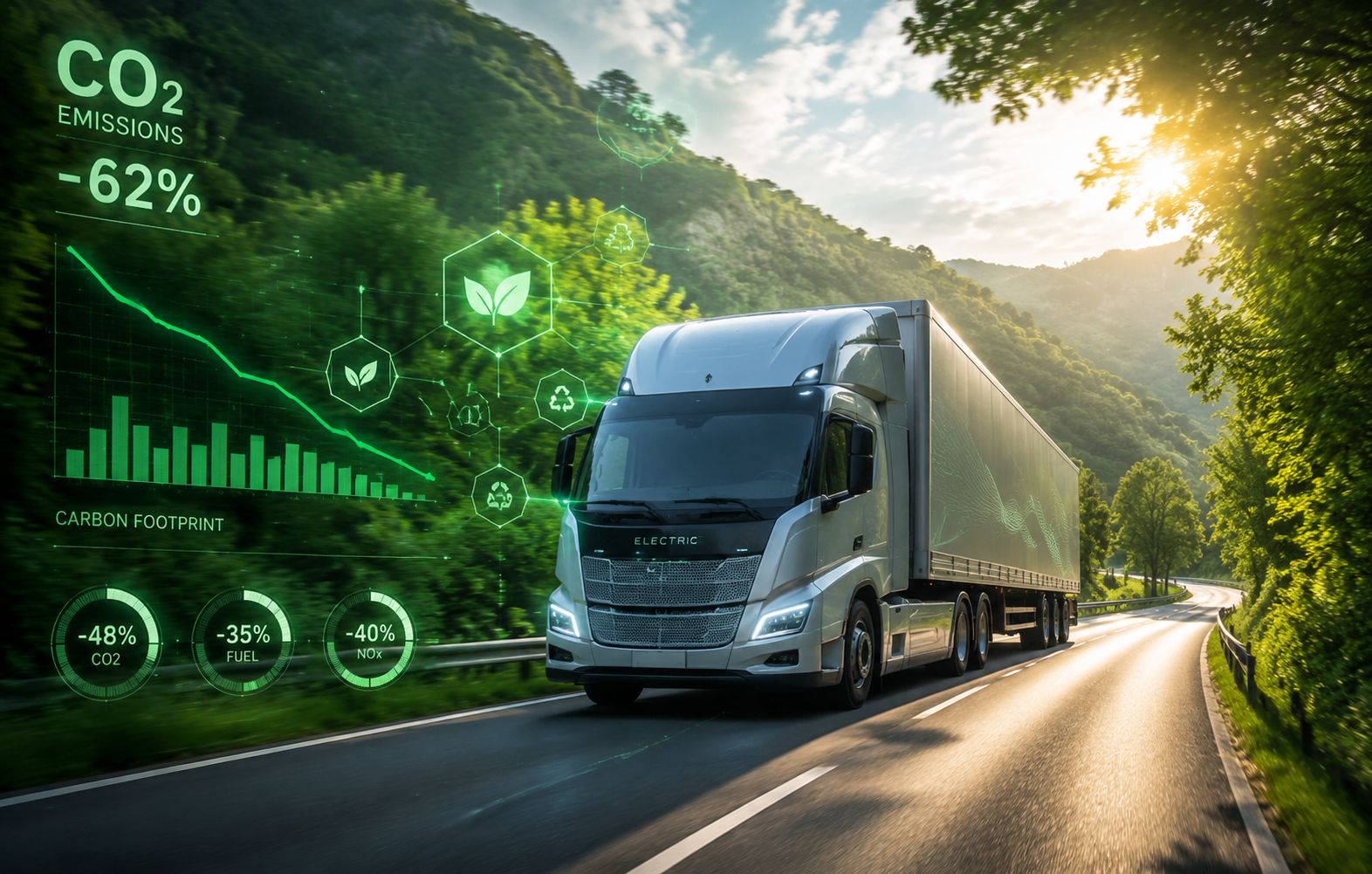
In 2026, as companies navigate the complexities of international trade, "green logistics" has evolved from a buzzword into a core pillar of corporate strategy. For a CTO or COO, adopting sustainable principles isn't just a moral stance anymore — it's become an operational requirement, driven by carbon taxes, tightening ESG regulation, and shifting customer expectations. The challenge is doing this without sacrificing growth or efficiency. That's where an advanced logistics AI system comes in, turning carbon savings into an optimization problem rather than a financial burden.
The Sustainability Mandate: Moving Beyond CSR
Sustainability used to live inside CSR reports. Now it's a data-driven metric with a direct line to profitability. The emissions generated by logistics operations are substantial, and empty mileage and idle downtime are increasingly treated as both environmental and economic losses. Custom software gives businesses the transparency they need to actually track environmental performance. The main drivers behind AI-based sustainability include:
- Regulatory Compliance: Meeting the stricter carbon emission rules being enforced across the EU and North America.
- Cost Savings: Cutting fuel consumption through optimal load routing.
- Brand Alignment: Matching the values of partners and consumers who factor sustainability into who they work with.
- Longer Asset Lifespan: Extending the life of vehicles and machinery through predictive maintenance.
Carbon-Aware Routing: The Intersection of Efficiency and Ecology
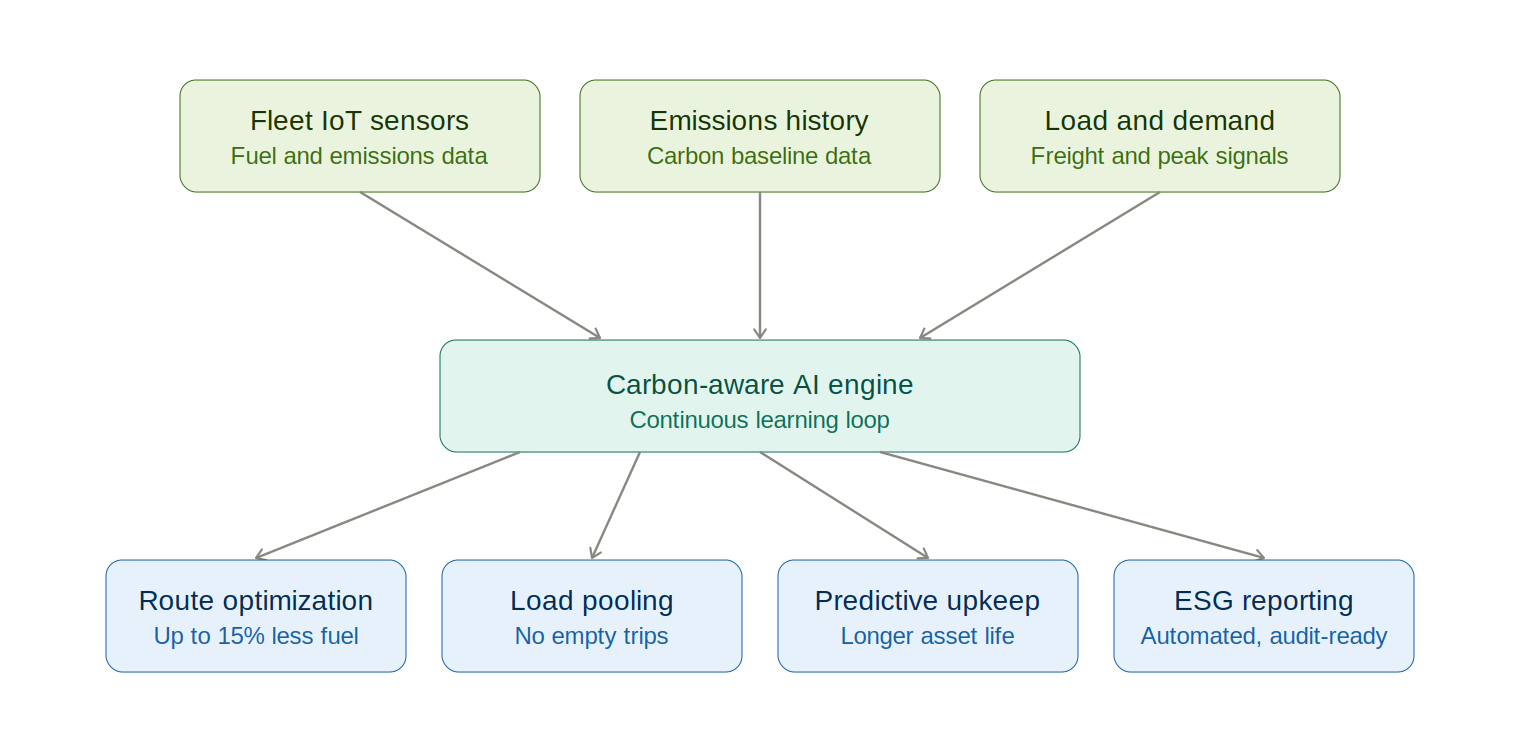
The clearest impact of AI on green logistics shows up in route automation. Conventional route planning optimizes for distance and speed; carbon-aware planning also factors in truck load, engine type, road grade, and idle time from traffic congestion. Running these variables through a logistics AI system can cut fuel usage by up to 15% while keeping delivery times intact.
Predictive Analytics as a Tool for Waste Reduction
Waste in logistics isn't just about emissions — it's about inefficient use of resources generally. Predictive analytics enables "load pooling," aggregating freight from multiple sources to make fuller use of available vehicles. That approach eliminates empty trips and keeps the carbon cost per shipment as low as possible. Accurately predicting peak periods also lets companies avoid resorting to expedited shipping.
The Role of IoT in Real-Time Emission Orchestration
Any sustainability framework is only as good as the data behind it. IoT sensors across the fleet enable real-time monitoring of fuel efficiency and emissions. That data doesn't just sit in a database — it feeds back into the AI, which learns which drivers and routes perform best. The result is a continuous improvement loop where the software actively recommends adjustments to keep emissions within target thresholds.
Implementing a Sustainable Logistics Framework for 2026
Scaling a green program across a corporation calls for a modular approach to software engineering. Rather than trying to transform the entire network at once, CTOs should focus on adding sustainability modules into their existing dispatch software. That path allows for a smoother transition and measurable ROI at each step.
Critical requirements for successfully implementing green logistics:
- Carbon Baseline Audit: Use historical data to establish a carbon emissions baseline across the entire supply chain.
- Modular AI Implementation: Roll out modules focused on routing and load planning to optimize energy use first.
- Supply Chain Partner Selection: Use the platform to assess and choose partners based on their own sustainability practices.
- Automated ESG Reporting: Generate ESG-aligned reports automatically instead of compiling them by hand.
The future of logistics, at a global scale, is green. Every organization's goal now should be building a system that's scalable, resilient, and secure against environmental risk in the years ahead. Getting there means viewing automation requirements through an AI lens — letting CTOs treat sustainability as a source of innovation rather than a cost center. The path forward is built on data, orchestrated by AI, and executed through custom software that respects both the planet and the margin.
Key Takeaways
- Green logistics has shifted from a CSR talking point to a measurable, profit-linked metric driven by carbon taxes and ESG regulation.
- Carbon-aware routing factors in truck load, engine type, road grade, and idle time — and can cut fuel use by up to 15% without hurting delivery times.
- Predictive load pooling eliminates empty trips and reduces the carbon cost per shipment by making fuller use of available vehicles.
- IoT fleet data feeds a continuous AI improvement loop, turning real-time emissions and efficiency data into ongoing route and driver adjustments.
- A modular rollout — baseline audit, routing/load AI, partner vetting, automated ESG reporting — lets sustainability programs scale without disrupting existing operations.
- Treating sustainability as an AI-driven optimization problem, rather than a compliance cost, is what turns green logistics into a competitive advantage.