In the fast-moving logistics world of 2026, the warehouse has stopped being just a place to store items and become a high-speed fulfillment facility. The challenge for CTOs and COOs isn't finding more space — it's coping with the sheer complexity of handling large volumes at high speed. When a WMS can't keep up, the problems compound fast. The fix is putting AI agents in the driver's seat.
The Evolution of the Warehouse: From Storage to Intelligent Fulfillment
Conventional warehousing ran on manual paperwork and rigid, rules-based software. Modern smart warehousing runs on logistics AI instead, turning data from IoT sensors and cameras directly into operational instructions.
The strategic benefits of moving to an AI-driven WMS include:
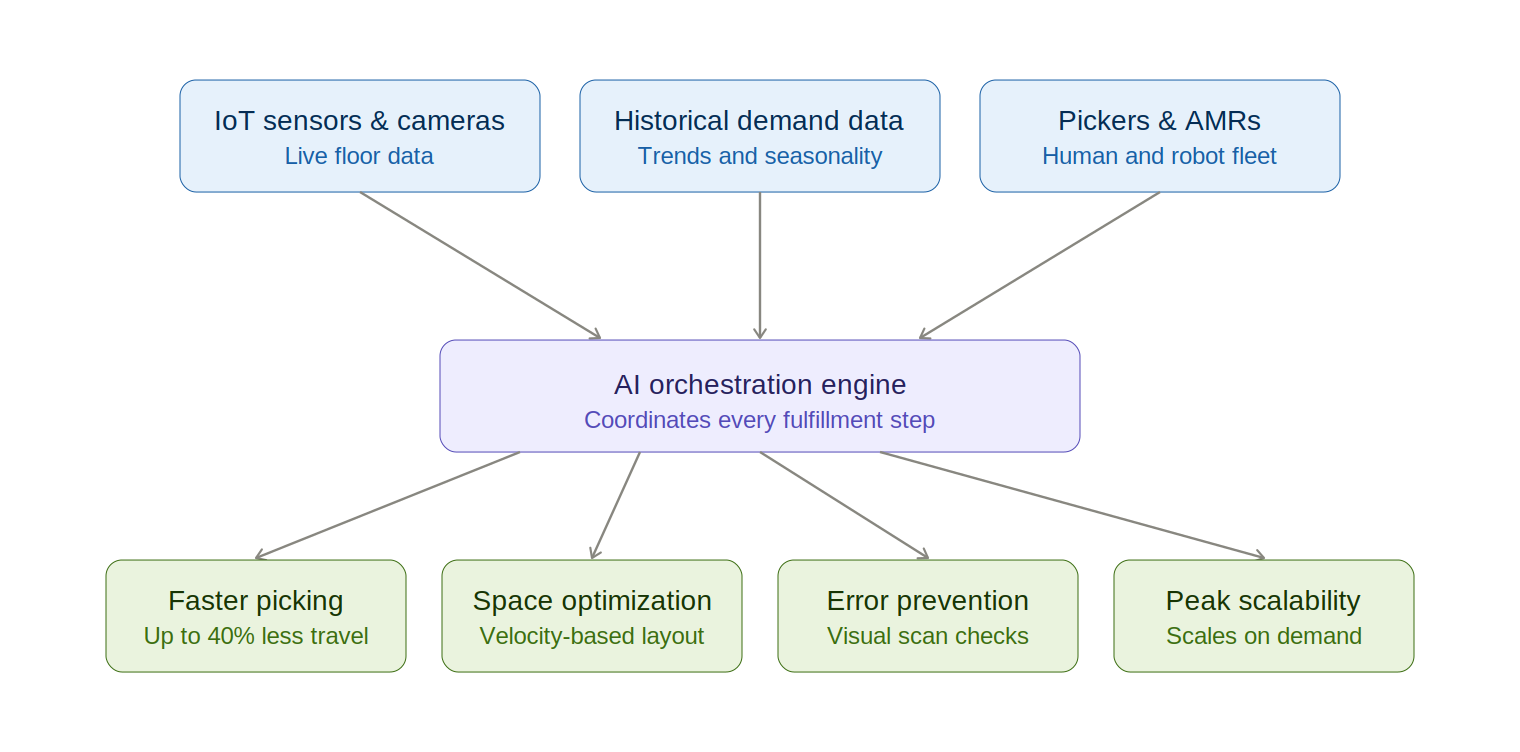
- Greater Labor Productivity: AI makes pickers more efficient, cutting travel time by up to 40%.
- Space Optimization: Sorting inventory algorithmically based on how fast it moves.
- Error Prevention: Visual scanning systems that confirm the right item lands in the right package.
- Scalability: The ability to scale operations quickly during peak demand.
AI Agents in Action: Optimizing Sorting, Picking, and Packing
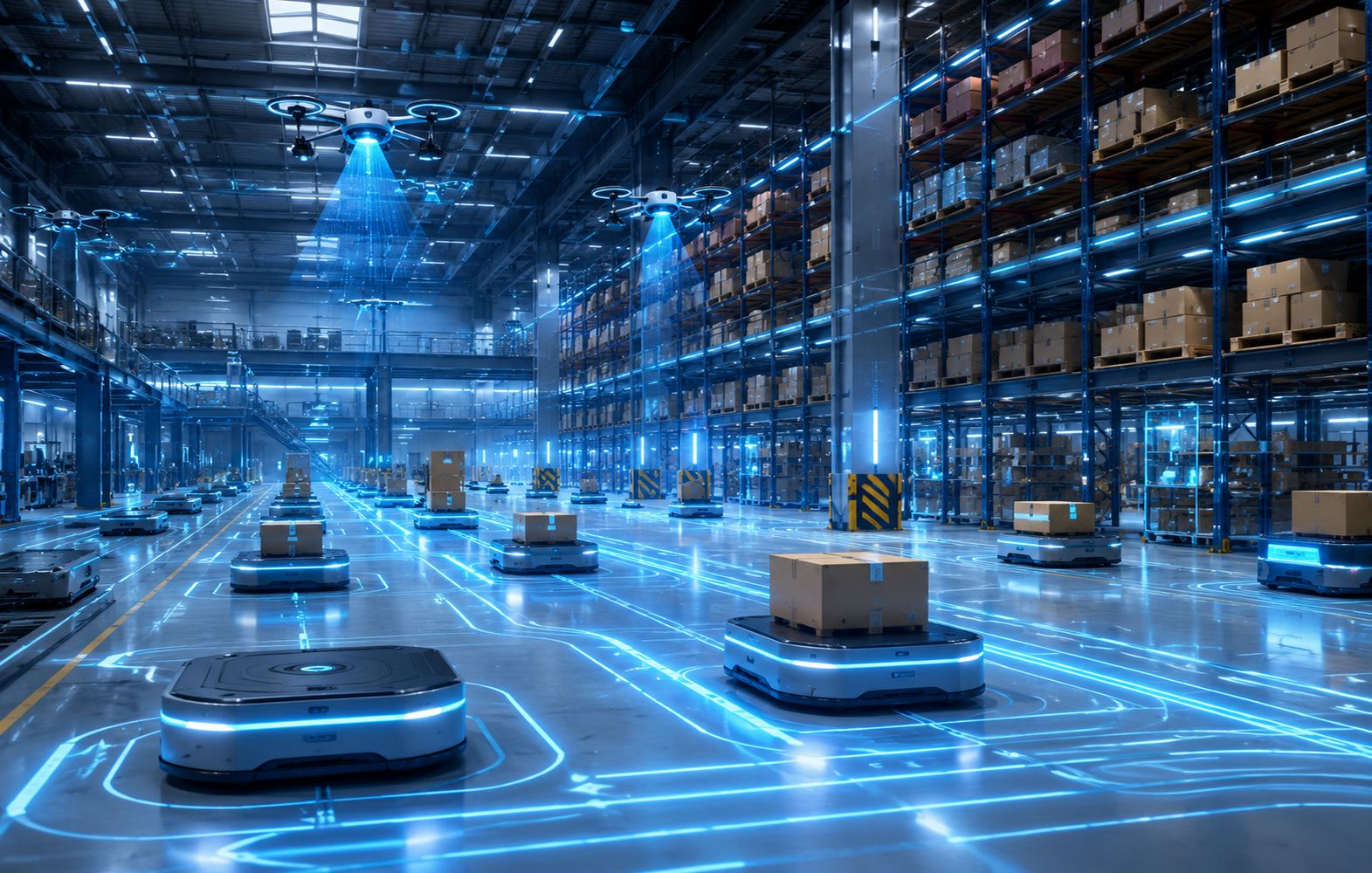
At the core of a modern custom software solution for warehousing sits the "Orchestration Engine." It uses AI agents to coordinate between human pickers and Autonomous Mobile Robots (AMRs). That level of granularity in WMS optimization is what lets even complex, multi-item orders get fulfilled in record time.
Predictive Inventory: Solving the Overstock and Stockout Dilemma
Inventory imbalance is one of the biggest pain points for warehouse managers. AI-driven WMS platforms use predictive analytics to forecast demand with real precision. By reading historical data alongside market trends, the system can trigger reorders automatically — essential for maintaining logistics visibility and staying financially healthy.
The Legacy Integration Puzzle: Modernizing Without Disruption
Many enterprise clients hesitate to upgrade because they're locked into legacy systems. We build "Intelligent Wrappers" that inject AI capabilities directly into existing infrastructure, so companies can tackle automation incrementally and scale without risking a system failure.
The Roadmap to an Autonomous Warehouse Ecosystem
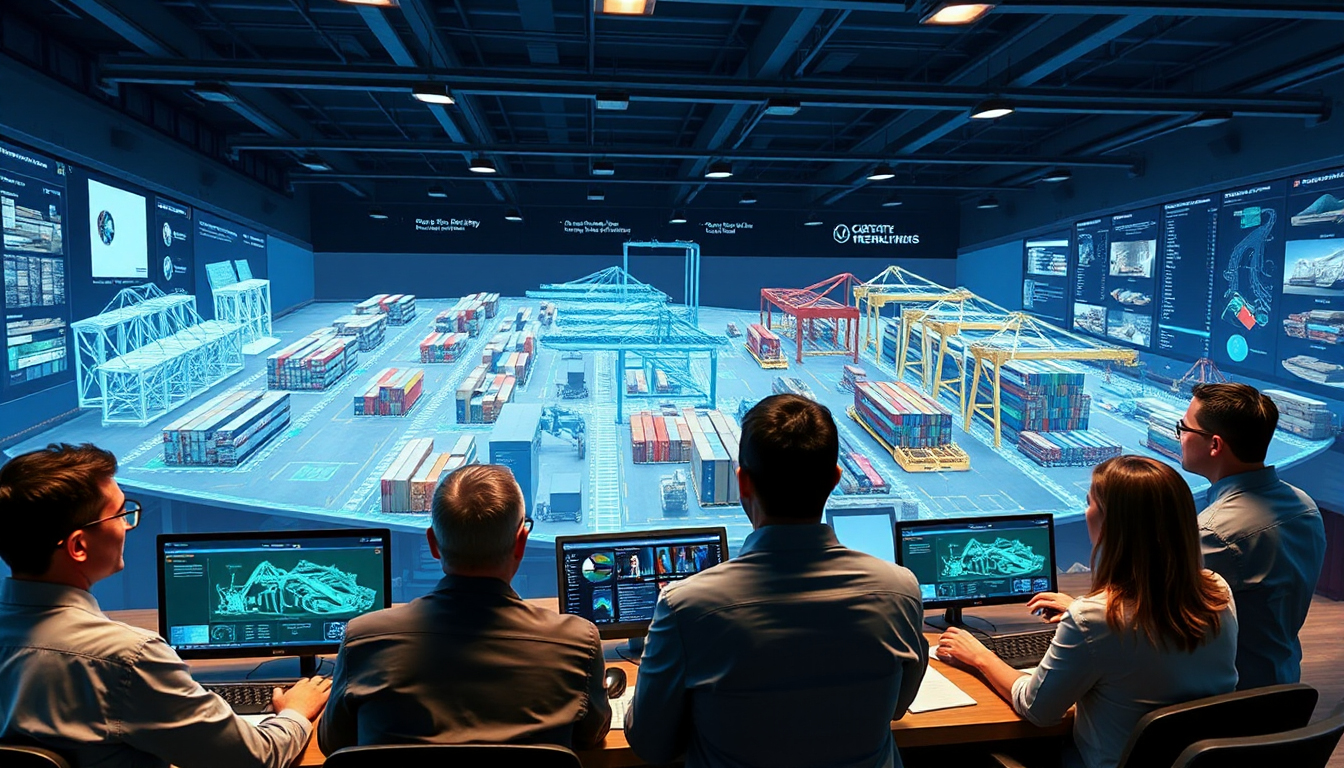
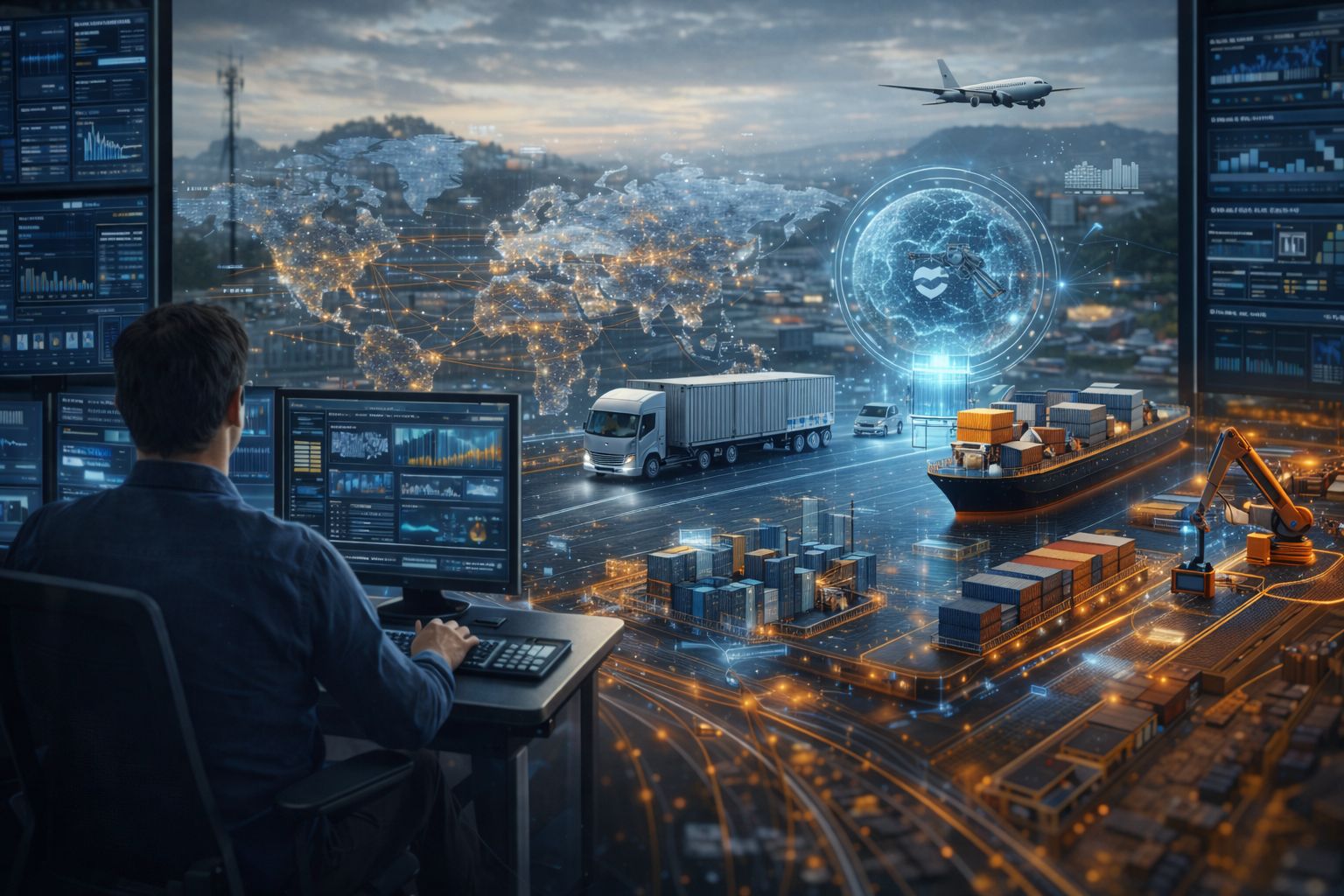
The shift toward a smart warehouse starts with data collection and ends with a fully harmonized ecosystem. Connecting your WMS to the dispatch system and a logistics cybersecurity framework gets you a system resilient enough to handle whatever the market or the technology throws at it next.
Key stages for a successful AI WMS implementation:
- Operational Heat Mapping: Study current process flows to pinpoint where manual friction is costing you the most.
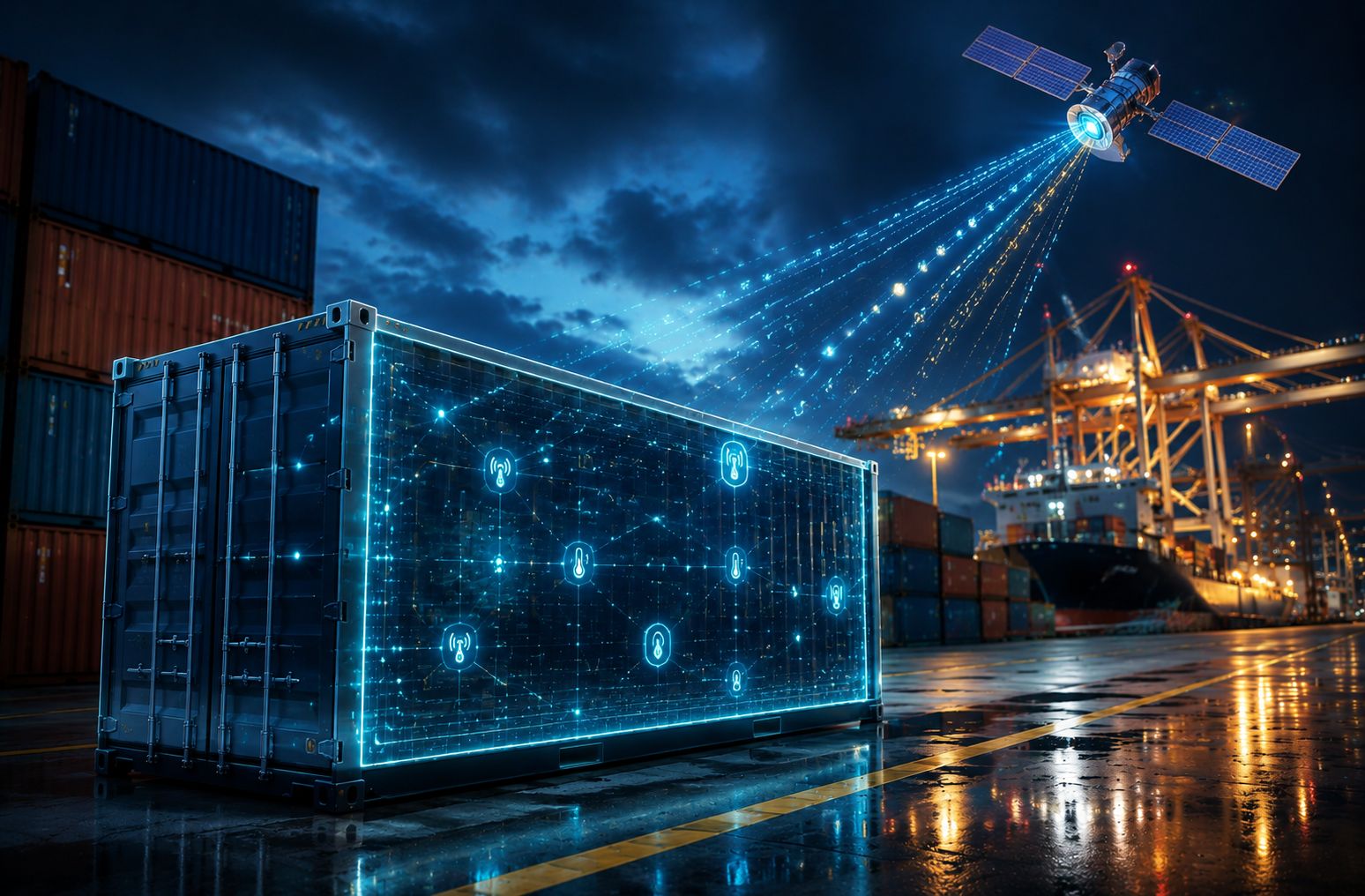
- IoT and Edge Computing: Deploy sensors and visual systems to feed the AI real-time data.
- AI Pilot Testing: Run AI-assisted picking in one section first to benchmark real results.
- Full-Spectrum Integration: Roll the WMS out across the entire supply chain.
The intelligent warehouse is set to become a non-negotiable part of success in 2026. Moving to AI agents is the way through the complexity CTOs and COOs are facing, and with the right team behind it, a logistics company can turn its warehouse into a genuine competitive advantage.
Key Takeaways
- Smart warehousing replaces rigid, rules-based WMS software with AI that turns live IoT and camera data into real-time operational instructions.
- AI-driven WMS delivers up to 40% less picker travel time, algorithmic space optimization, visual error prevention, and rapid peak-demand scaling.
- An "Orchestration Engine" coordinates human pickers and Autonomous Mobile Robots together, enabling fast fulfillment even for complex multi-item orders.
- Predictive analytics reads historical and market data to forecast demand and trigger reorders automatically, preventing both overstock and stockouts.
- "Intelligent Wrappers" let companies add AI to legacy WMS/ERP infrastructure incrementally, avoiding a risky full rebuild.
- A successful rollout follows a clear order: heat-map current friction, add IoT/edge data collection, pilot AI in one zone, then integrate across the full supply chain.